
Plug-In Solar Is Now Legal in Great Britain – But Is Your Home Ready?
Plug-in solar has arrived in Great Britain. From 27 August 2026, homeowners can legally buy and use compliant plug-in solar systems, opening up a simple and relatively low-cost way to generate electricity at home. But before you plug one into a socket, there is an important question to ask: is your electrical installation suitable?
Plug-in solar, sometimes referred to as balcony solar, allows a small solar PV system to generate electricity and feed it directly into a property’s electrical installation through a standard mains socket. Unlike traditional rooftop solar, these systems can be much simpler to install and are particularly attractive to homeowners, renters and people living in flats or properties where conventional solar panels aren’t practical.
The Government says compliant plug-in solar systems can provide up to 800W of power and could help households reduce their electricity consumption and energy bills.
For many homeowners, that makes plug-in solar an exciting new option.
But “plug in” doesn’t necessarily mean “plug in anywhere”.
Why your electrical installation matters
A plug-in solar system is different from an ordinary electrical appliance.
Instead of simply drawing electricity from your home’s electrical installation, the system generates electricity and feeds it back into the circuit. This means electricity can flow through the circuit in a direction that the installation may not have originally been designed to accommodate.
That is why the condition and configuration of your home’s electrical system matters.
One of the key considerations is the Residual Current Device (RCD) protecting the circuit. RCDs are designed to provide protection against electric shock, but certain types of RCD may not provide the appropriate protection when used with plug-in solar generation.
Electrical Safety First currently recommends that households have at least a Type A bidirectional RCD protecting circuits intended for plug-in solar. It also advises that properties with Type AC RCDs should have these upgraded before using plug-in solar.
This is particularly relevant in older properties where the electrical installation may have been installed many years ago, or where alterations have been carried out over time.
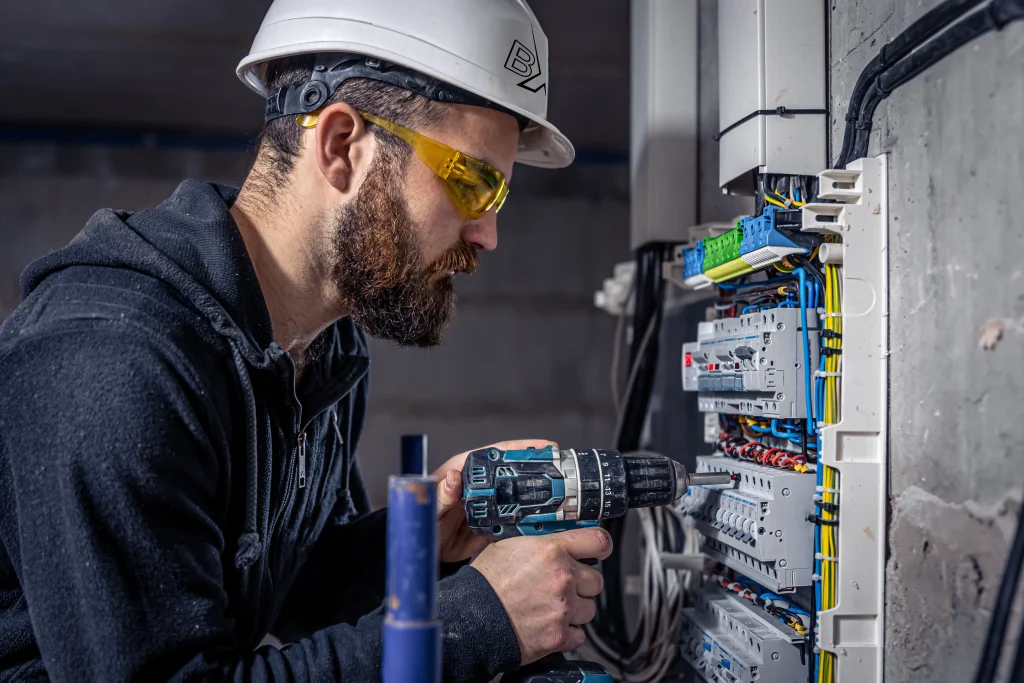
What is a Plug-In Solar Check?
At BXB, we believe the safest approach is simple:
Check your electrical installation before you buy your plug-in solar system.
Our experienced electrical engineers can assess the relevant parts of your home’s electrical installation to establish whether it is suitable for reverse power input from a plug-in solar system.
Depending on the property, our assessment can include consideration of:
- The existing consumer unit and protective devices
- RCD type and suitability
- The condition of the electrical installation
- The circuit intended for the plug-in solar system
- Earthing and protective arrangements
- Cable and circuit characteristics
- Existing electrical loads and network configuration
- The suitability of the installation for reverse power flow
- Any remedial electrical work that may be required
If an issue is identified, we can advise you on what needs to be done and, where appropriate, carry out the necessary electrical remedial work.
The aim isn’t to sell you a solar system.
It’s to make sure the electrical installation you already have is ready for one.
Why this matters particularly now
Plug-in solar has been widely used in parts of Europe, particularly Germany, for several years. The UK has now introduced its own regulatory framework, with specific requirements designed around the UK electrical environment. The Government’s interim product specification sets requirements for plug-in solar systems connected to existing UK low-voltage electrical installations, alongside requirements relating to G98 and BS 7671.
With major retailers now bringing plug-in solar products to the market, the number of systems installed in homes is likely to increase rapidly.
That means there is likely to be a growing demand for electricians who understand not just solar products, but the electrical installations they are being connected to.
This is where BXB’s experience matters.
Experienced electricians who understand the whole electrical installation
At BXB, our electrical engineers have extensive experience assessing, testing and correcting domestic and commercial electrical installations.
We understand that introducing generation into an existing electrical network isn’t simply a case of buying a product and plugging it into a socket.
Our experience with RCD protection, electrical networks, protective devices and electrical compliance means we can look at the installation as a whole and identify potential issues before they become a problem.
If your installation isn’t ready for plug-in solar, that doesn’t necessarily mean you can’t have it.
In many cases, the appropriate remedial work may be relatively straightforward. Our team can explain what needs to be addressed and provide a practical solution to bring the installation into a suitable condition.
Do I need a Plug-In Solar Check?
There is no requirement for every homeowner to have an electrician install their plug-in solar system. However, electrical safety guidance recommends having your installation assessed, particularly where the age or condition of the electrical system is uncertain.
We would particularly recommend considering a check if:
- You live in an older property
- You don’t know when your consumer unit was last upgraded
- Your property has an older RCD arrangement
- You have carried out DIY or previous electrical alterations
- You have recently moved into the property
- You are unsure which circuit you intend to use
- You are buying plug-in solar for the first time
- You simply want reassurance that your installation is suitable
A Plug-In Solar Check can give you that reassurance before you spend money on a system.
Plug-in Solar: a simple idea that still needs a safe electrical system
The appeal of plug-in solar is obvious. It provides a relatively accessible way for more households to generate some of their own electricity without the cost and complexity associated with a traditional rooftop solar installation.
But the simplicity of the product shouldn’t mean overlooking the electrical installation behind it.
Your solar panels might be new. Your wiring might not be.
Making sure the two are compatible is an important part of using plug-in solar safely.
Thinking about plug-in solar?
Before you order your panels, talk to BXB.
Our experienced electrical engineers can assess your installation, check the relevant RCD and protective arrangements, identify any potential issues and advise you on any work required to make your electrical system suitable for plug-in solar.
Book a Plug-In Solar Check with BXB today.
Serving homeowners across Cambridgeshire, Bedfordshire and Huntingdonshire, BXB combines experienced electrical engineering with a practical, responsive approach to property care.
Don’t just plug it in. Check it first.
Leave Comment